

Filtration in the Sugar Industry
Filter media within the various stages of sugar production.
Ensure unparalleled product quality by using premium-grade filtration materials.
Executive Summary
Filtration is a core unit operation in industrial sugar production. From raw juice to finished sugar, multiple filtration systems and textile filter media are used, each facing distinct requirements for temperature resistance, chemical stability, mechanical strength, and cleanability.
This white paper provides a structured overview of key filtration applications in sugar factories and sugar refineries, from juice purification to sludge filtration and the syrup campaign. A particular focus is placed on filter press filtration in the carbonation process as a mechanically demanding step, and on the optimization potential of our new polyamide 12 (PA12) filter cloths compared with standard polypropylene (PP).
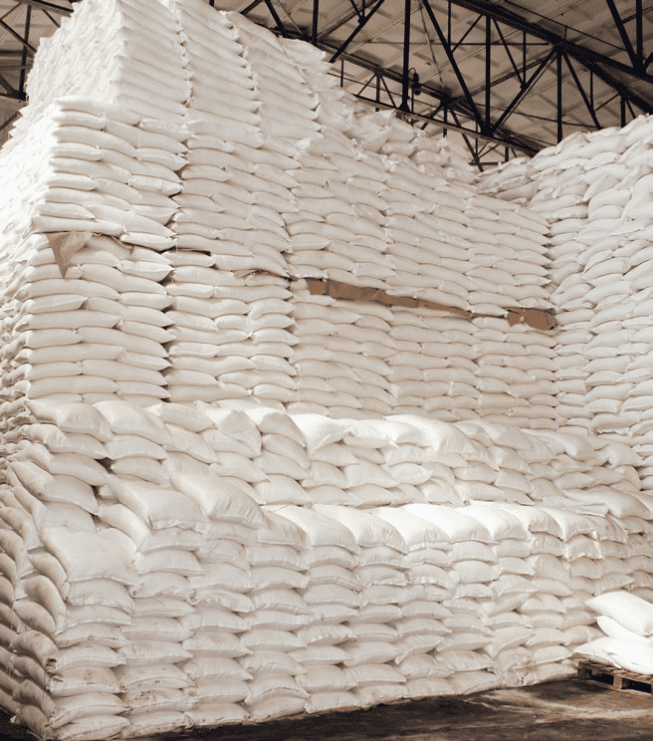
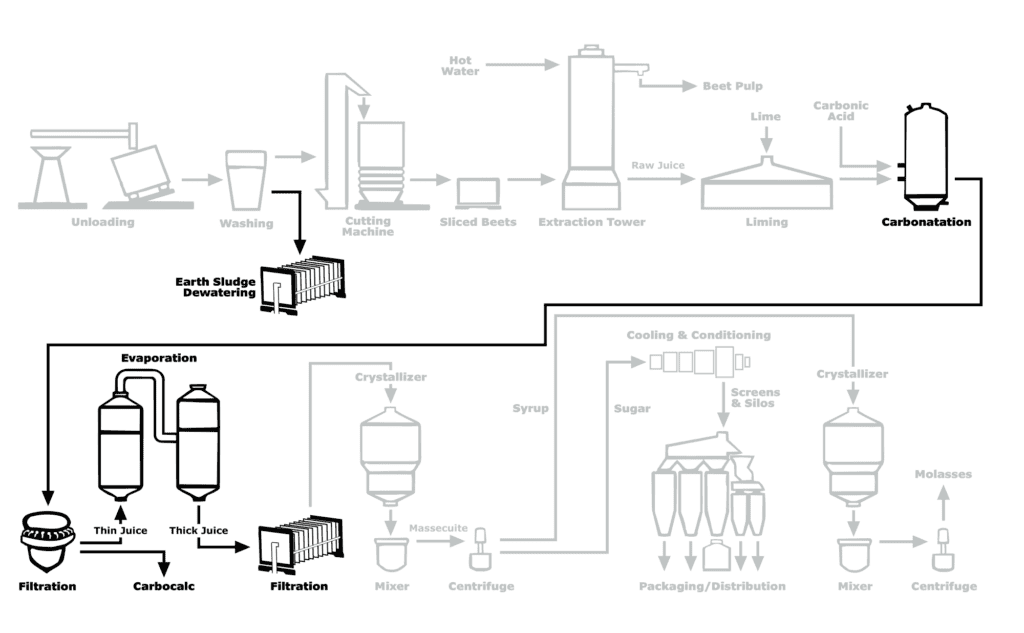
Filtration Stages in Sugar Beet Factories
Filtration across the sugar production chain
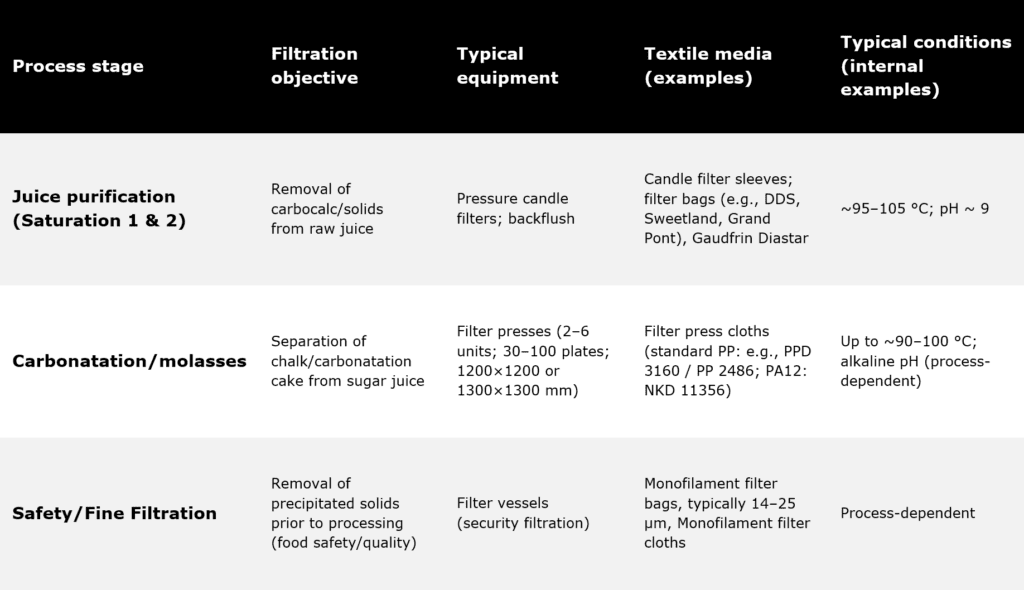
Filtration stages differ substantially in process chemistry, temperature, particle characteristics, pressure level, and cleaning regimes. Therefore, there is no universal filter medium; each application requires purpose-specific design of fabric type, pore structure, confection, and sealing geometry.
Juice Purification (Saturation 1 & 2)
Cloth Abrasion Resistance Testing Results
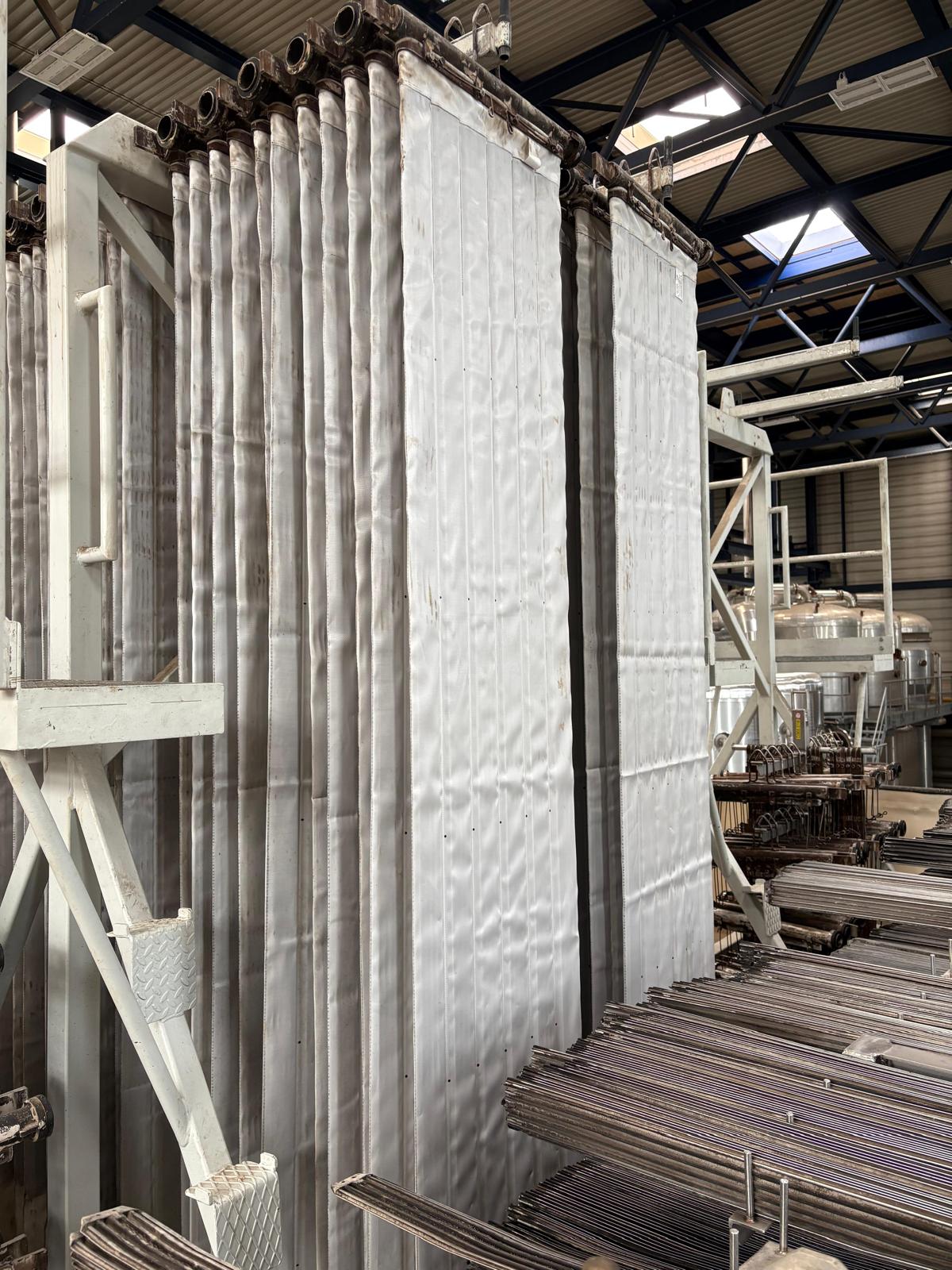
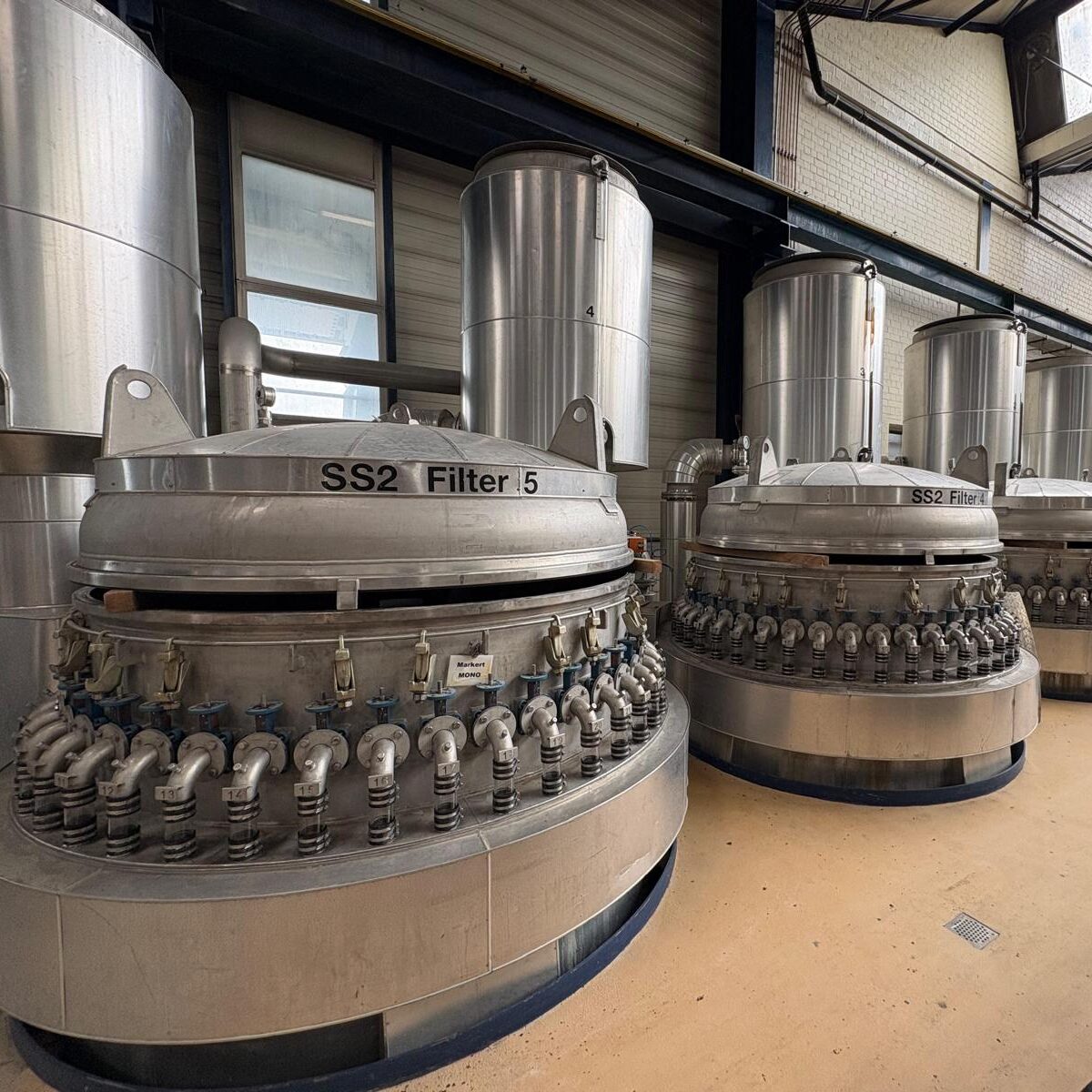
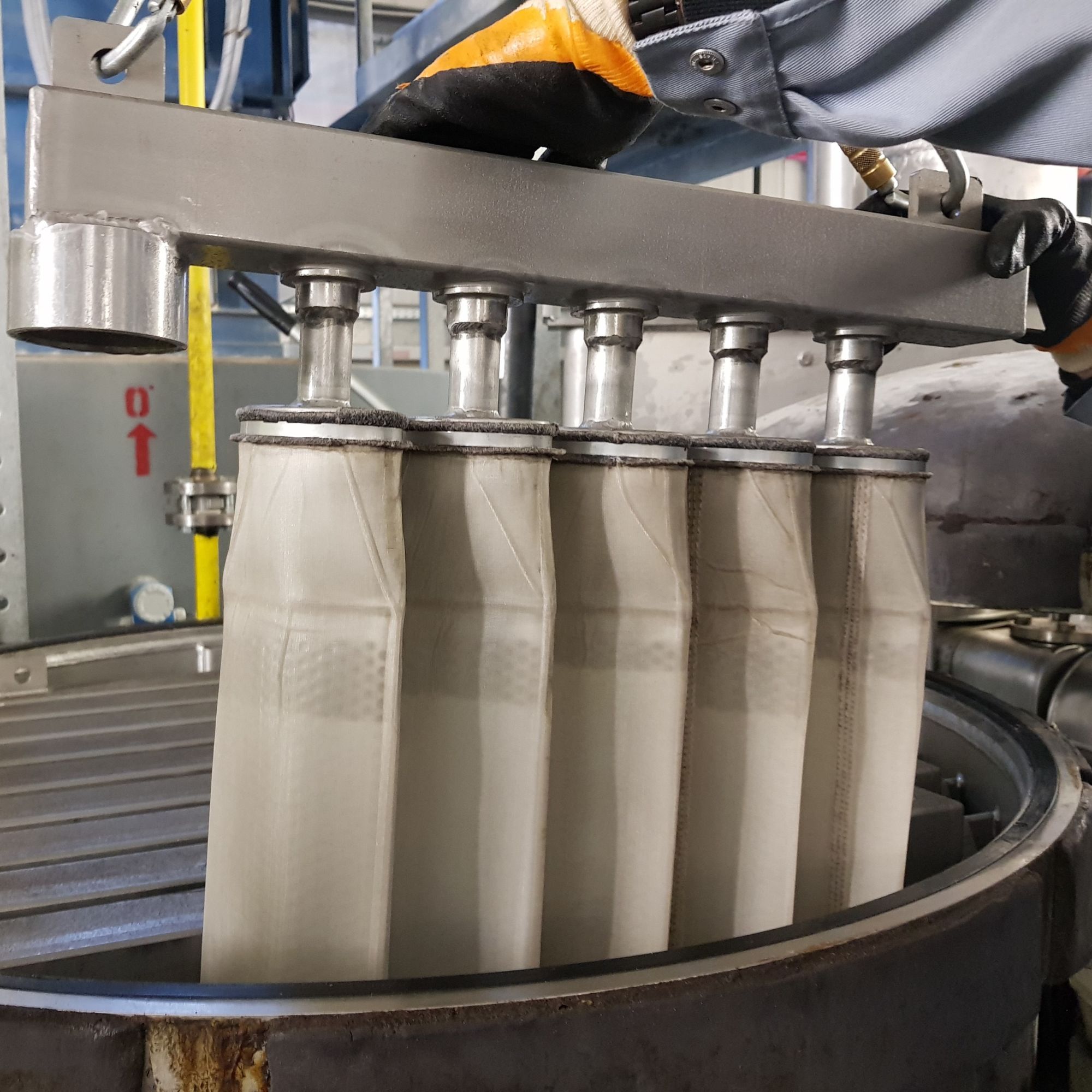
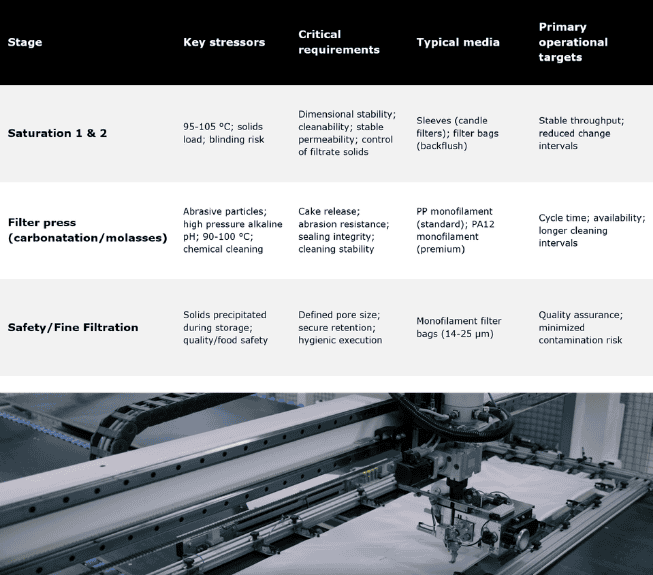
In juice purification (Saturation 1 & 2), carbocalc is removed from raw juice. Typical systems include pressure candle filters using textile sleeves and back-flash/backwash filter vessels using textile filter bags. This high-temperature step demands robust media that can maintain stable filtration performance (including control of filtrate solids) while remaining dimensionally stable and cleanable.
Practical Scaling
→ Candle filters: one pressure vessel typically requires 200–312 sleeves; example dimension Ø 120 mm × 3,000 mm.
→ Back-flash filters: one pressure vessel typically requires 50–200 filter bags; example dimension 700 mm × 3,000 mm.
Typical failure modes

Carbonatation
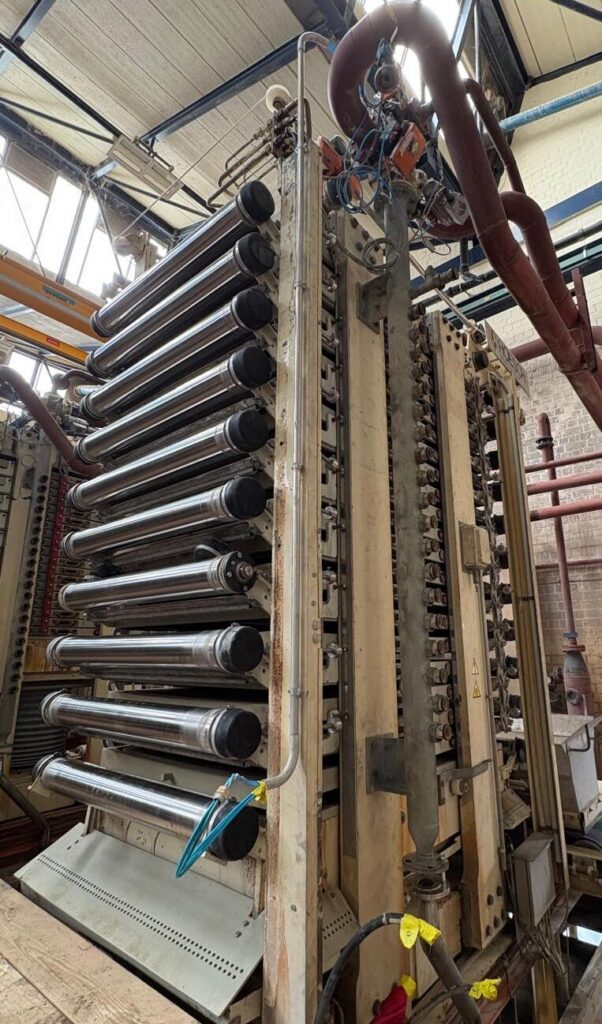
Equipment and Media
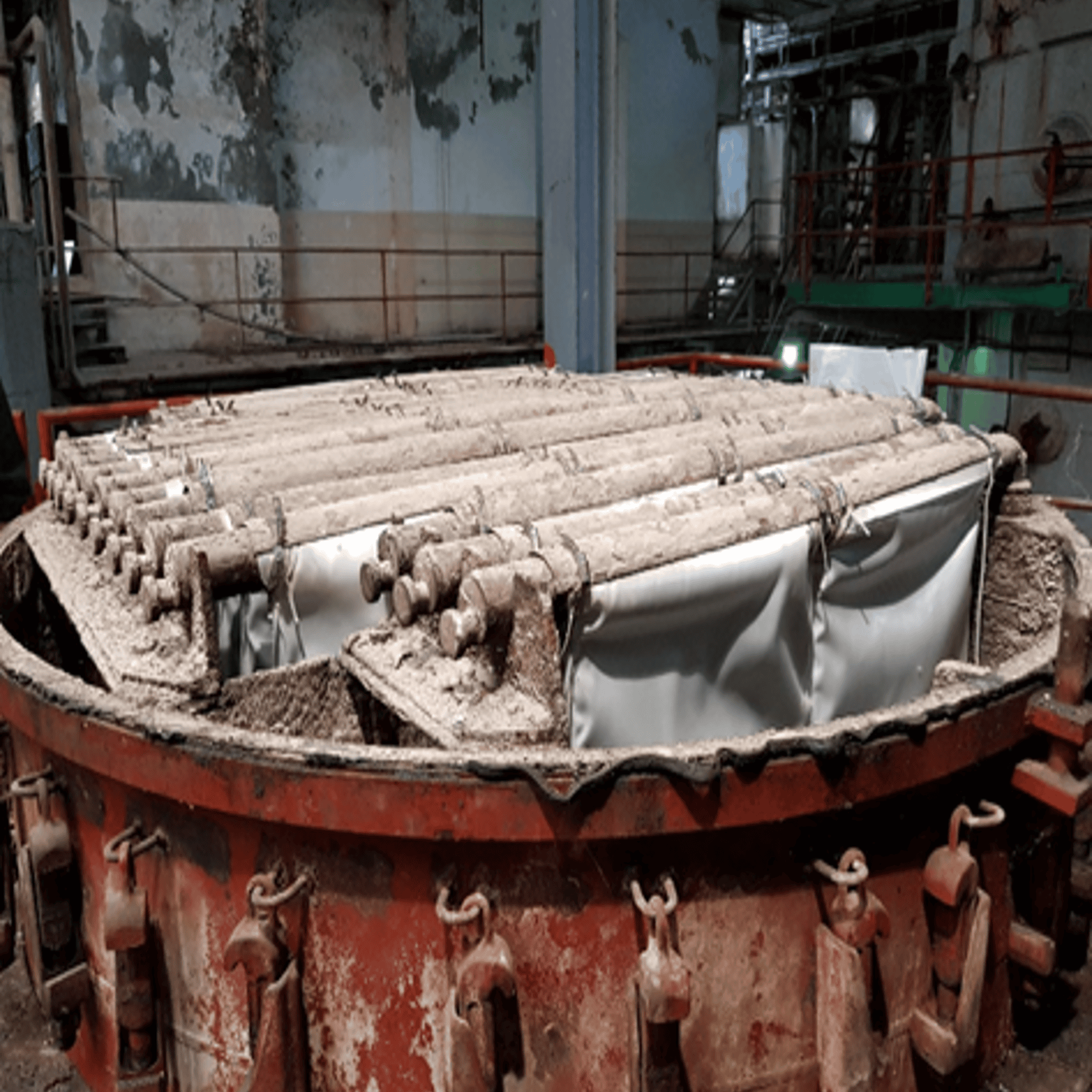
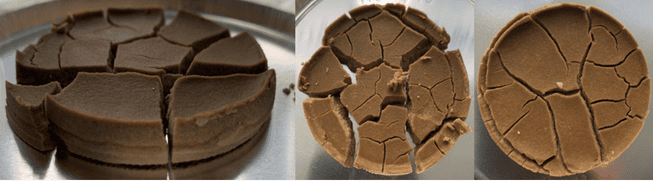
Filter press and tower press filtration of carbonatation sludge are among the most mechanically demanding applications in the sugar industry. High press pressures, abrasive calcium carbonate particles, cyclic loads, elevated temperatures, and alkaline process chemistry act simultaneously on the filter medium. Reliable cake release is critical for short cycle times, high equipment availability, and minimal manual intervention.
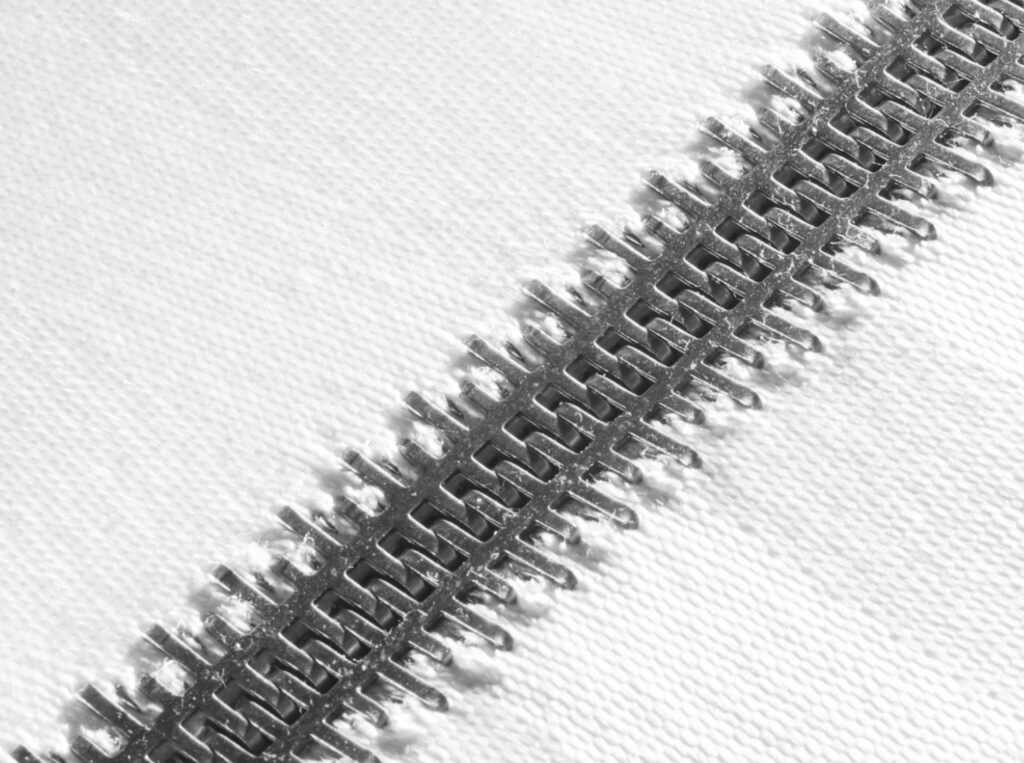
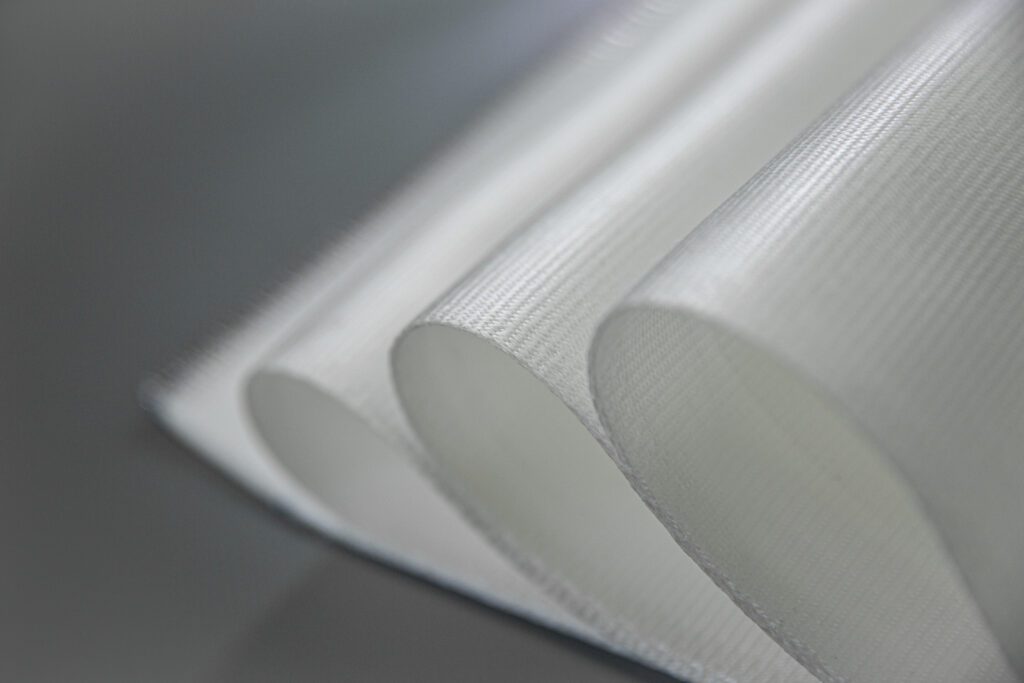
Equipment and Media
Filter press and tower press filtration of carbonatation sludge are among the most mechanically demanding applications in the sugar industry. High press pressures, abrasive calcium carbonate particles, cyclic loads, elevated temperatures, and alkaline process chemistry act simultaneously on the filter medium. Reliable cake release is critical for short cycle times, high equipment availability, and minimal manual intervention.
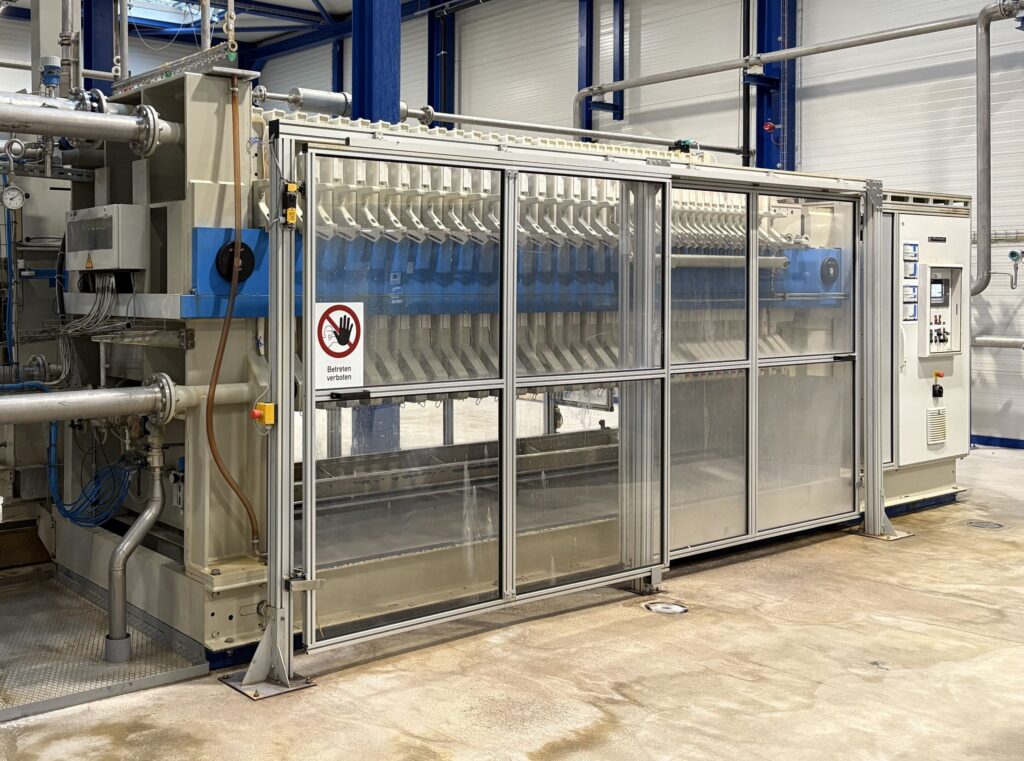
Material Comparison
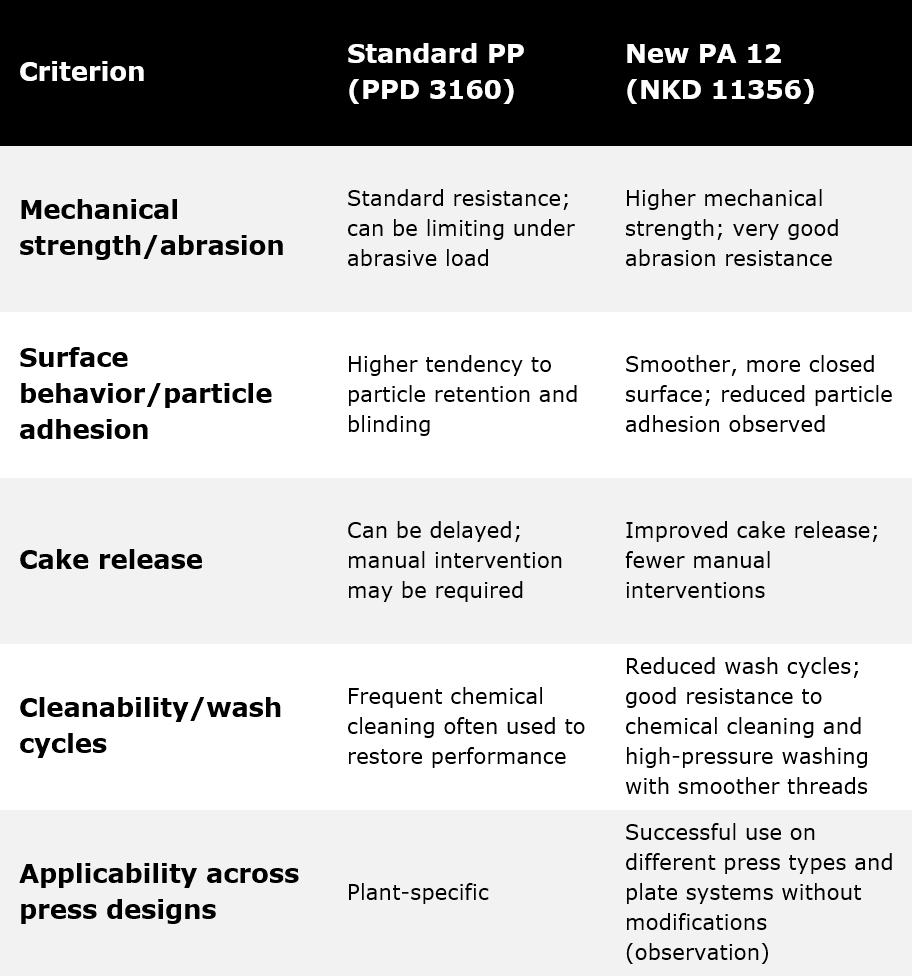
PPD 3160 vs. NKD 11356 (New PA 12)
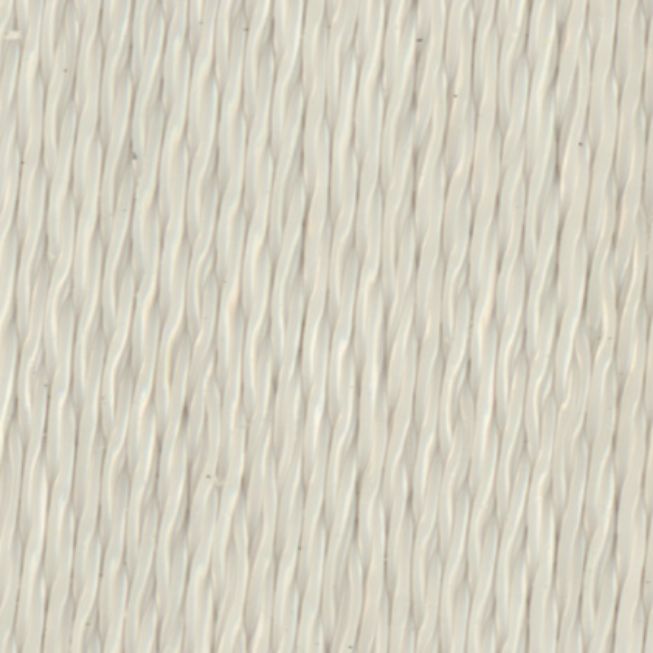
In filter presses, typical standard solutions use polypropylene monofilament fabrics (e.g., PPD 3160 or PP 2486), often combined with edge coatings to prevent leakage in the sealing area. Under extreme operating conditions, however, wear, blinding, and delayed cake release can increase maintenance effort and destabilize cycle times. To address these limitations, new PA12 filter cloths NKD 11356 (New PA 12) were evaluated under real operating conditions.

Case Study
Operating Observations and Economic Impact
Filter cloth performance influences overall plant economics. Improvements in cake release and cleaning intervals directly affect cycle time, availability, labor effort, energy use, operating cost, and process stability—especially during long campaigns and high-throughput operation.
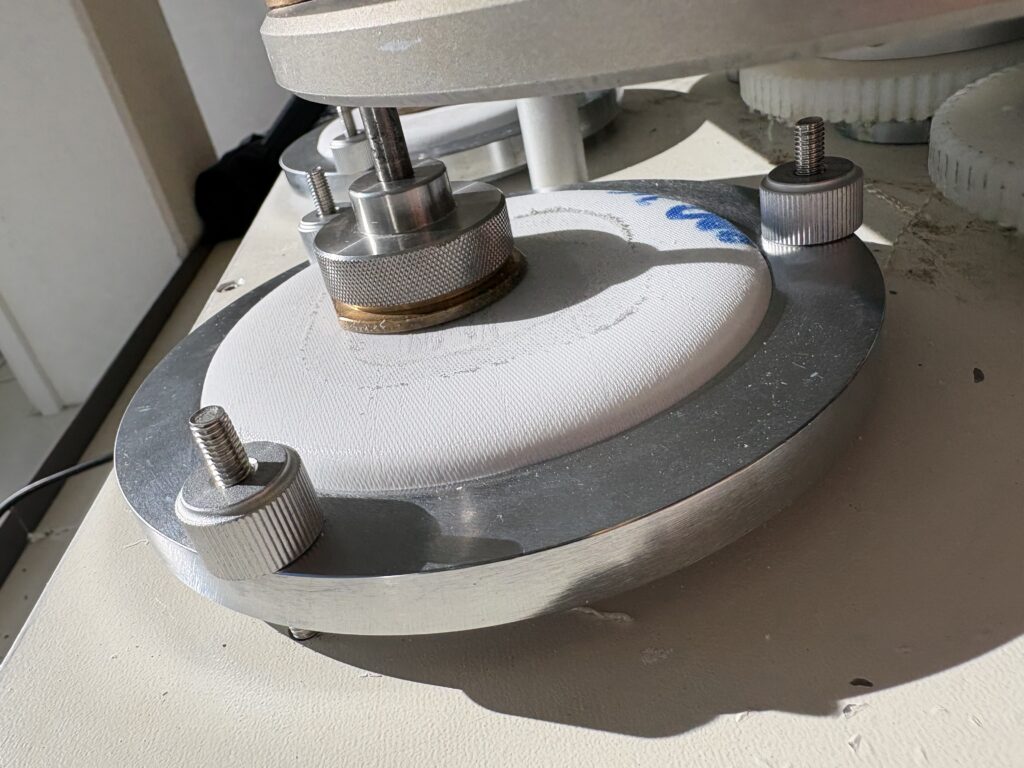
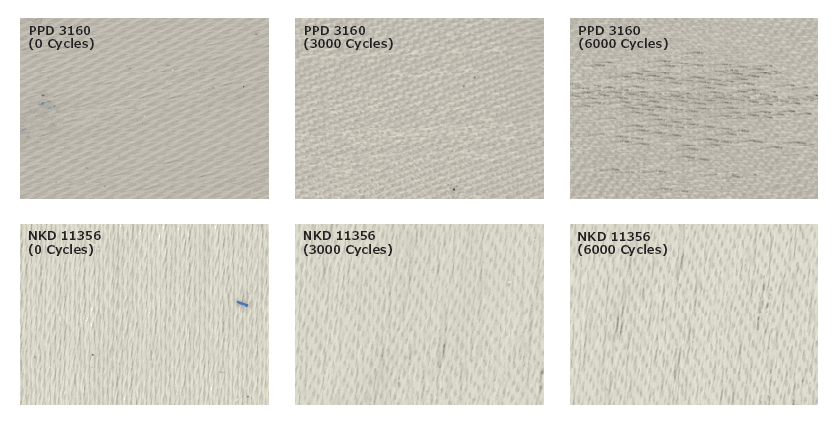
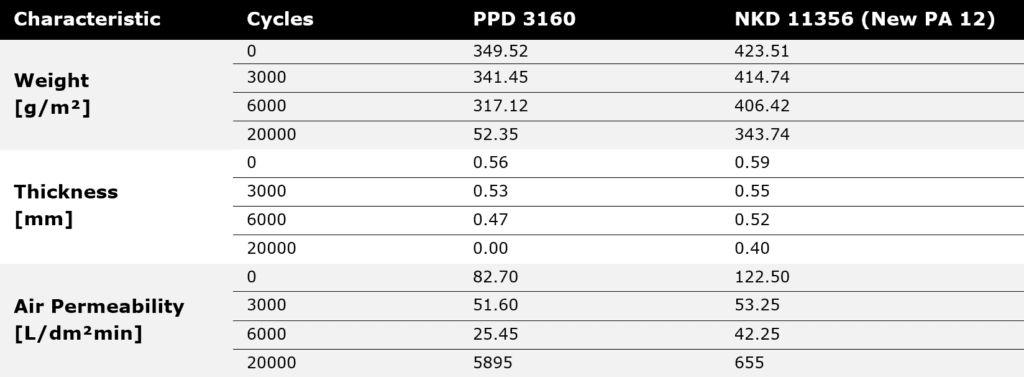
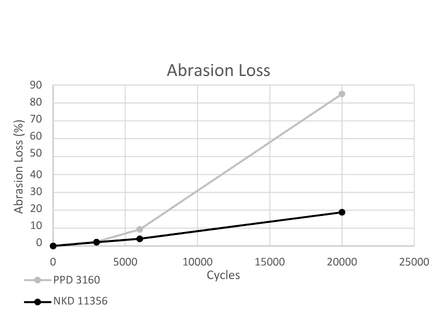
Two fabric samples, PPD 3160 and NKD 11356 (New PA 12), were tested to evaluate and compare their abrasion resistance properties using the Martindale test method.
The following parameters were measured at various stages of the abrasion test:
→ Abrasion loss (in %)
→ Air Permeability
→ Thickness
→ Area weight (mass per unit area)
Summary:
PPD 3160
→ Weight remains largely constant until later cycles.
→ Thickness decreases steadily with increasing cycles.
→ Significant reduction of air permeability.
NKD 11356 (New PA 12)
→ Weight remains nearly constant throughout testing cycles.
→ Minimal decrease in thickness.
→ Maintains greater air permeability through increasing cycles.
Conclusion:
PPD 3160
→ Behaves consistently and remains structurally stable, despite reductions in thickness and permeability.
NKD 11356 (New PA 12)
→ Maintains higher air permeability overall, indicating a more open structure, though still affected by abrasion.
Safety/Fine Filtration
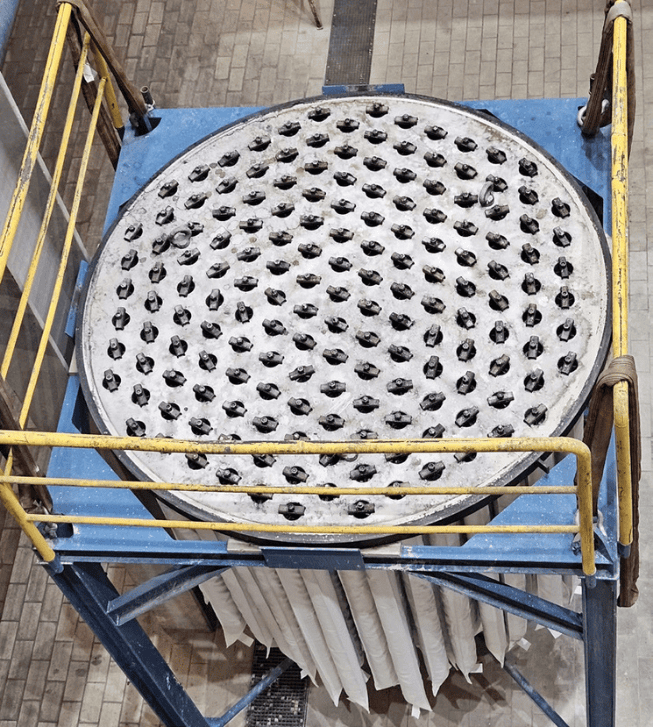
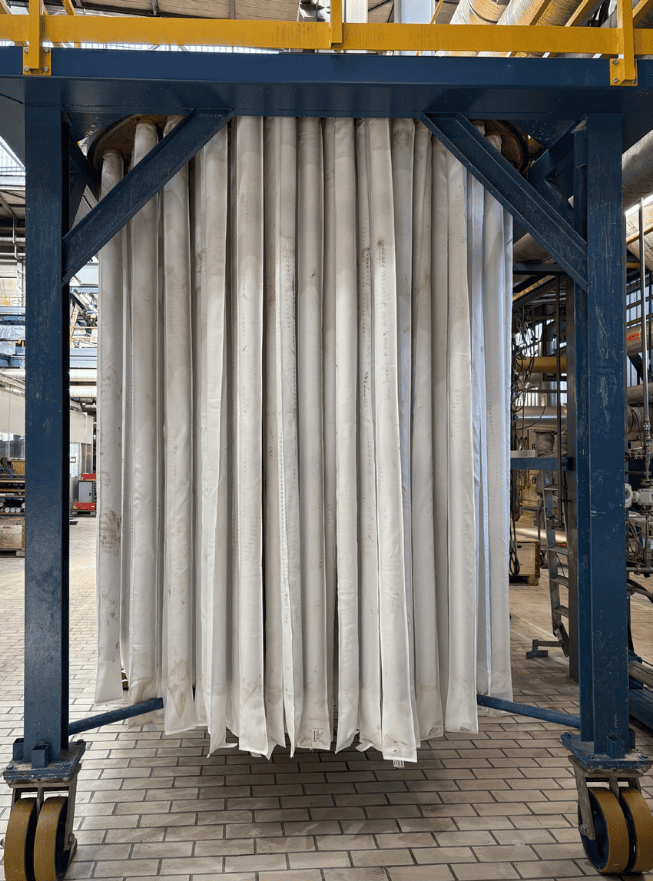
Before processing, precipitated solids must be removed. Safety and fine filtration are therefore applied—commonly via filter vessels with filter bags of defined pore size. Internal examples mention monofilament filter bags in the 14–25 μm range as security filtration to support food safety and sugar quality.
Thick Juice Campaign
In addition to the selecting the perfect fabric, a perfect design and strategic reinforcements are decisive for the durability of the filter cloth. The feeding shoes made of rubber and metal tend to rub through the cloth material.
Some beet sugar factories no longer process a part of their thick juice into sugar during the beet campaign, but instead carry out a so-called thick juice campaign following this campaign. This lasts between four and ten weeks, depending on the quantity of thick juice in storage.
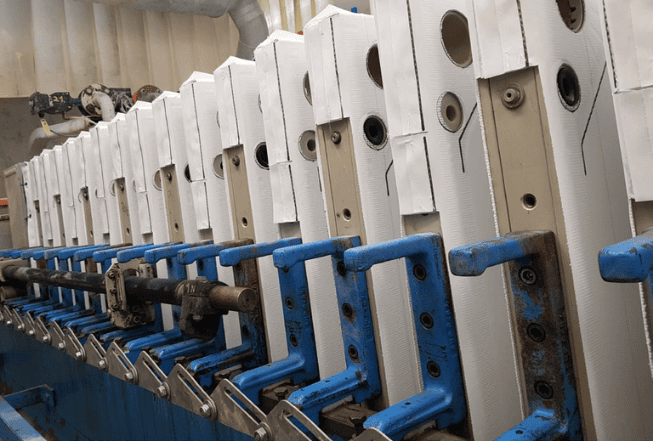
Coarse and fine filter systems are used to clean and clarify the thick juice. Filter presses fitted with appropriate filter cloths are used for coarse filtration. This produces a filter cake, which is subsequently disposed of. The filtration process is aided by filter aids (diatomaceous earth or cellulose).
The textile filters are usually made of polypropylene. The filter cloths on the filter presses can generally be reused in the following beet campaign.
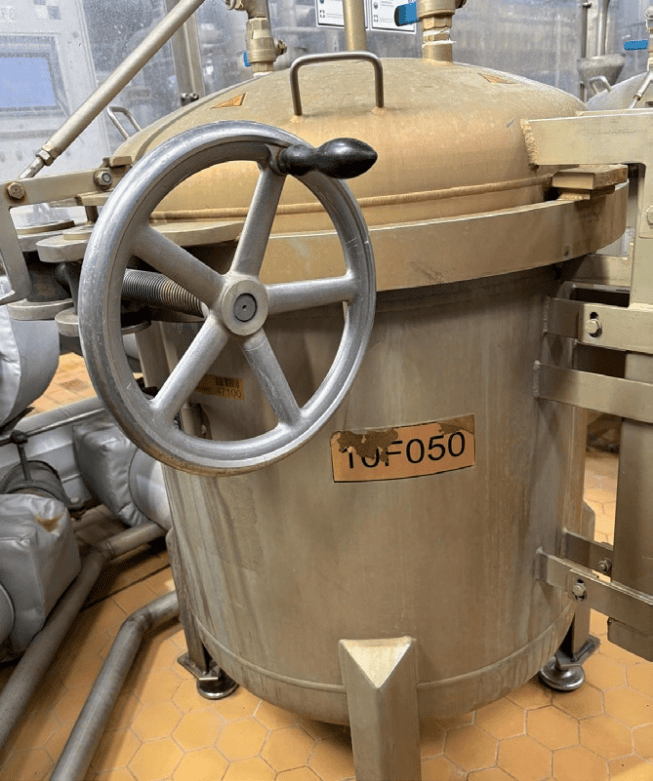
The purified thick juice is then further purified using additional filters – often bag filter systems with very fine filter bags (1 μm separation efficiency).

Earth Sludge Dewatering
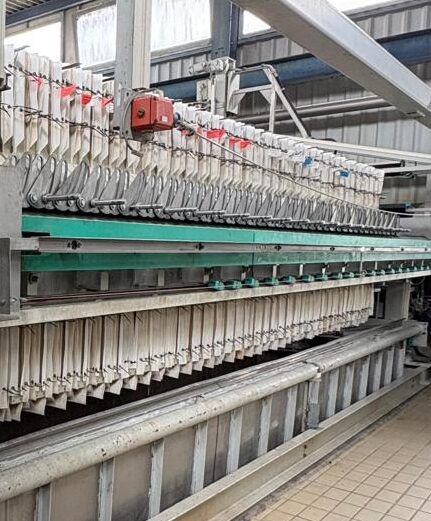
The dewatering of soil sludge from sugar beet processing is a crucial step in sugar factories for clarifying the slurry water which is produced during beet washing, reducing its volume and returning the water to the production cycle.
We offer filter cloths optimized for the specific requirements and conditions of membrane filter presses. These are generally made of polypropylene or polyamide.
Methods and technology for soil sludge dewatering:
→ Solids in the beet wash water are first separated by sedimentation.
→ Membrane filter presses are considered the latest development in the field of soil sludge dewatering; the filter cake produced here significantly facilitates storage and handling.
→ Dewatering drastically reduces the volume of sludge that needs to be transported and stored.
Recycling of soil sludge:
The dewatered sludge, which consists of soil, sand, and beet fragments, is frequently returned to agricultural land as a soil improver or fertilizer.
Design Guidelines
Application-specific filter media engineering
Based on the process conditions described, filter media engineering should be application-specific. Key design levers include fabric type (mono-/multifilament), pore structure, confection, and sealing geometry—matched to temperature, pH, particle spectrum, pressure level, cycle profile, and cleaning regime.
Markert Customized Solutions
Labratory Testing
We could run laboratory analysis of the filter cloth with subsequent analysis of the results. This includes determination of:
→ Filtration test and fabric screening with our pressure nutsche
→ Electric resistance through and along the fabric
→ Air permeability
→ Water permeability
→ Pore size through microscope
→ Weight
→ Binding type
→ Fabric material
→ Thickness
→ Yarn type
→ Abrasion behavior
→ Chemical resistance
Appendices
Economic relevance and selection logic
Filter cloths are wear parts, yet they have a disproportionate impact on downtime, maintenance cost, labor effort, and process stability. Selection should therefore not focus solely on purchase price, but on the total operational impact over a campaign—especially cycle time stability, cleaning intervals, and equipment availability.
Food-contact compliance overview
(EC 1935/2004, EU 10/2011, FDA 21 CFR 177.1520)
For food-industry applications, food-contact conformity and traceable compliance documentation are essential. As an EU framework, Regulation (EC) No 1935/2004 defines general safety and inertness principles for materials intended to contact food. For plastics, Commission Regulation (EU) No 10/2011 specifies requirements for plastic materials and articles intended for food contact. Note: This overview is for orientation and does not replace plant- and product-specific compliance assessment.
Glossary
→ Saturation 1 & 2 (juice purification): Process step in which carbocalc/solids are removed from raw juice under elevated temperature conditions.
→ Carbocalc: Solid phase removed during juice purification.
→ Carbonation sludge (chalk sludge): Sludge phase separated from sugar juice in filter presses.
→ Cake release: Detachment of filter cake from the cloth surface; critical for cycle time and availability.
→ Permeability: flow capacity of the filter medium; influences throughput and filtration performance.
Sources
→ Internal materials: “White paper occurrence of filter cloths in the sugar industry.pptx” (27 Feb 2026) and “Markert Filtration Sugar Process.pptx” (June 2024).
→ EU legal framework (orientation): Regulation (EC) No 1935/2004 and Commission Regulation (EU) No 10/2011 (EUR-Lex).
